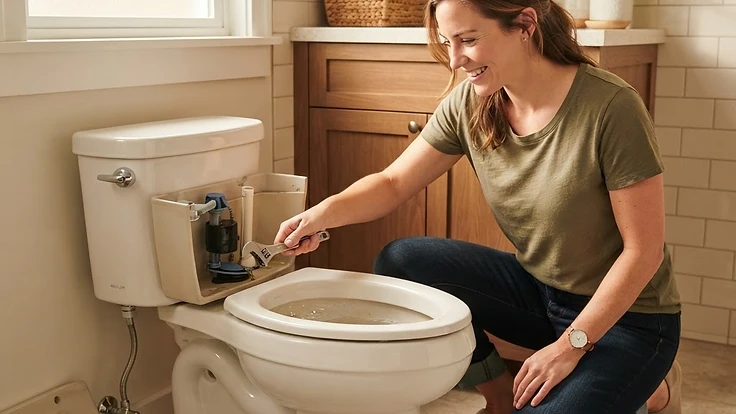
How to Diagnose and Fix a Running Toilet Before It Wrecks Your Water Bill
Learn how to pinpoint what's making your toilet run constantly and fix it yourself in under 30 minutes.
That Ghostly Refill Sound Isn't Normal
If your toilet makes a hissing, trickling, or periodic refilling sound even when nobody's used it, you've got a running toilet — and it's not a quirky feature of your plumbing. A toilet that runs continuously can waste anywhere from 200 to 2,000 gallons of water per day, depending on the severity. That's not a typo. On some water bills, a running toilet alone can add $50-$200 a month in charges you never saw coming.
The good news: almost every running toilet problem comes down to one of three parts, and all three are cheap, easy to find, and easy to swap out — no plumber required.
Step 1: Pop the Lid and Watch the Tank
Start by removing the tank lid and setting it somewhere safe (they crack easily if dropped). Flush the toilet and watch what happens inside the tank as it refills. You're looking for three possible culprits:
- The flapper doesn't seal fully after flushing
- The fill valve doesn't shut off when it should
- The float is set too high, causing water to spill into the overflow tube
Watching one full flush cycle — from flush to complete refill and shutoff — will usually tell you which of these is happening.
Step 2: Check the Flapper First (It's the Usual Suspect)
The flapper is the rubber or plastic piece at the bottom of the tank that lifts up during a flush and drops back down to seal the tank from the bowl. Over time, flappers warp, crack, or develop a mineral film that prevents a tight seal. This is the single most common cause of a running toilet.
Quick test: Drop a few drops of food coloring into the tank water and wait 10 minutes without flushing. If color appears in the bowl, your flapper isn't sealing and water is leaking straight through.
The fix: Turn off the water supply valve behind the toilet, flush to drain the tank, and unhook the old flapper (it usually just unclips from two pegs near the base). Bring it to the hardware store to match it exactly, or just buy a universal flapper — they're $8-$15 and install in under five minutes. Make sure the chain connecting it to the flush handle has a little slack, not so tight that it holds the flapper open slightly.
Step 3: If the Dye Test Comes Back Clean, Check the Fill Valve
If color didn't show up in the bowl, the leak isn't through the flapper — it's likely the fill valve not shutting off completely, or water constantly trickling into the overflow tube.
Look at the tall tube in the center of the tank (the overflow tube) and the float mechanism next to it. If water is running into that tube even after the tank should be full, you've got one of two issues:
-
The float is set too high. On ball-float designs, bend the metal arm slightly downward. On cylindrical float cups (common on newer fill valves), there's a small clip or screw you can adjust downward to lower the shutoff point. You want the water level to sit about an inch below the top of the overflow tube — there's usually a marked line inside the tank showing the ideal level.
-
The fill valve itself is worn out. These valves have internal seals that degrade over years of mineral buildup, especially in hard-water areas. If adjusting the float doesn't stop the trickle, the valve needs replacing. A universal fill valve kit costs $12-$20 and comes with instructions — it's a 15-minute job involving disconnecting the supply line, unscrewing the old valve from the tank bottom, and threading in the new one with the included gasket.
Step 4: Listen for the "Phantom Flush"
Some running toilets don't run continuously — they cycle on for a few seconds every 10-20 minutes, even with nobody home. This is called a phantom flush, and it's almost always a slow flapper leak that's just slow enough that the tank only needs a small top-off periodically. The fix is the same: replace the flapper.
When to Call a Plumber Instead
Most running toilet issues are solvable with a $10-$20 part and 30 minutes. But call a plumber if:
- You've replaced both the flapper and fill valve and it's still running
- There's visible cracking in the tank or bowl itself
- The shutoff valve behind the toilet won't turn or is corroded shut (this is common in older homes and can turn a simple fix into a bigger plumbing job)
- Water is leaking from the base of the toilet onto the floor, which points to a wax ring issue, not a tank problem
A Small Fix With a Big Payoff
A running toilet is one of those problems that's easy to ignore because it doesn't flood your house or set off alarms — it just quietly drains your wallet, gallon by gallon, month after month. The fix is almost always cheap and fast once you know where to look. Spend ten minutes doing the dye test and the visual check, and you'll usually know exactly which $10 part will solve it.
If you'd rather not play plumbing detective every time something in your house starts acting up, Start your free HomeNostics trial and let the app help you track, diagnose, and stay ahead of these small issues before they become expensive ones.