Why Your Garage Floor Has a Chalky White Residue (And What It's Telling You About Moisture)
That white powder on your garage floor is efflorescence—here's what causes it and when it signals a bigger moisture problem.
The Mystery White Powder
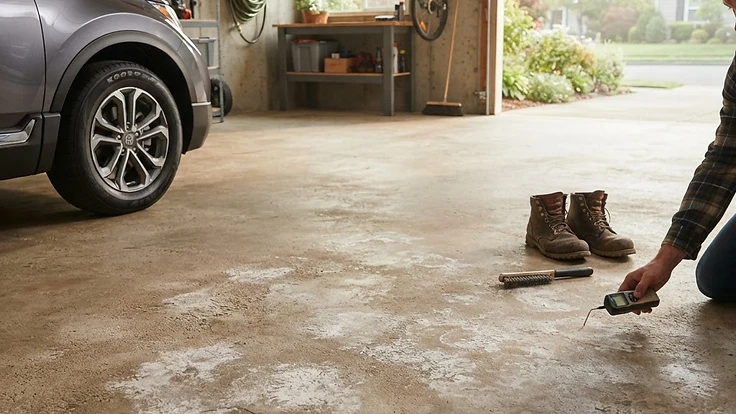
You sweep your garage floor, and a day later, a dusty white film is back—sometimes in patches, sometimes in long streaks that follow cracks or the edges of the slab. It wipes off easily, but it always returns. This isn't mold, mildew, or a cleaning product residue. It's efflorescence, and it's one of the most overlooked diagnostic clues your house gives you about moisture moving through concrete.
Efflorescence happens when water travels through porous concrete, dissolving mineral salts (mostly calcium) along the way. When that water reaches the surface and evaporates, it leaves the salts behind as a crusty white deposit. The powder itself is harmless. The water that carried it there is the real story.
Why This Matters More Than It Looks
A little efflorescence on a new garage slab is common and usually nothing to worry about—fresh concrete naturally releases excess moisture and lime as it cures, which can take 6–12 months. But if your garage is more than a year old and you're still seeing recurring white residue, especially in the same spots, water is actively moving through your slab on a regular basis. That's worth investigating, because concrete is porous enough to let groundwater pass through in slow motion, and your garage floor is basically sitting on top of the earth.
The risk isn't the powder—it's what moisture migration can lead to over time: softened or spalling concrete, rusted rebar inside the slab, warped stored items, and in attached garages, moisture creeping into adjoining walls or framing where it can eventually invite mold.
How to Tell Where the Water Is Coming From
Before you treat the symptom, figure out the source. Run this simple test:
- Clean the area completely. Scrub off all existing efflorescence with a stiff brush and water, then let the floor dry fully for 24–48 hours.
- Tape a 12-inch square of aluminum foil to the floor over a problem spot, sealing all four edges with duct tape so no air can get underneath.
- Check it after 24–48 hours.
- If moisture appears under the foil (on the concrete side), water is coming up through the slab—meaning it's a drainage or groundwater issue.
- If moisture appears on top of the foil, it's condensation from humid garage air, not a structural moisture problem.
This five-minute test tells you whether you're dealing with a plumbing/grading issue below the slab or simply humid air meeting a cool concrete surface—two very different fixes.
Fixing Surface-Level Efflorescence
If the test points to condensation (foil stayed dry underneath), your fix is mostly about air and humidity:
- Run a dehumidifier in the garage during humid months, especially if it's attached to the house.
- Improve ventilation—even cracking a window or adding a vent fan can help.
- Apply a breathable concrete sealer rated for garage floors. This slows surface moisture absorption without trapping vapor inside the slab (avoid non-breathable epoxy coatings until the underlying moisture issue is resolved—they can trap water and cause bigger problems, like delamination or mold under the coating).
Fixing Moisture Coming Up Through the Slab
If water showed up under the foil, the fix is about managing water outside the garage before it ever reaches the concrete:
- Check your grading. The soil around your garage should slope away from the foundation at least 6 inches over the first 10 feet. Regrading with topsoil is a weekend project that solves a surprising number of moisture issues.
- Inspect gutters and downspouts. If downspouts dump water near the garage foundation instead of carrying it several feet away, that's often the culprit. Extend them with downspout extensions.
- Look for cracks in the slab or foundation walls where groundwater could be entering directly. Small cracks can be sealed with a concrete crack injection kit; wider or actively growing cracks are a sign to bring in a foundation specialist.
- Consider a vapor barrier or sealant topcoat rated specifically for below-grade moisture, applied only after the exterior drainage fixes are in place. Sealing the top without fixing the source just hides the symptom.
When to Call in a Professional
Most efflorescence is a DIY-solvable drainage or ventilation issue. But call a foundation or waterproofing specialist if you notice:
- Efflorescence paired with visible cracking, bowing, or crumbling concrete
- Standing water or puddling inside the garage after rain
- A musty smell developing in an attached garage or adjoining room
- Efflorescence that keeps returning heavily even after fixing grading and gutters
This article is general information and not legal, financial, or medical advice.
The Bottom Line
That chalky white dust isn't just an annoyance to sweep away—it's your garage floor telling you exactly where water is moving. A quick foil test, a look at your grading and gutters, and a little patience can usually solve it before it becomes a bigger, more expensive problem. Catching it early is the difference between a weekend fix and a foundation repair bill.
Want help keeping track of maintenance clues like this before they turn into costly repairs? Start your free HomeNostics trial and let your home tell you what it needs, before it has to shout.