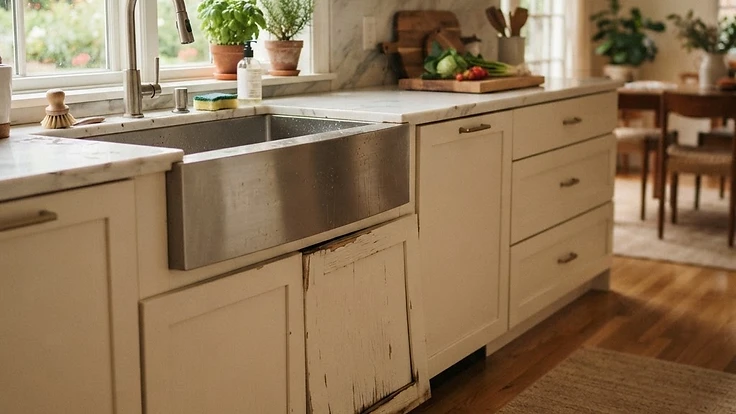
Why Your Kitchen Cabinets Are Swelling Near the Sink (And How to Stop the Damage Before It Spreads)
Swollen, soft cabinet wood under your sink almost always means hidden water damage—here's how to find the source and stop it for good.
The Warning Sign You Shouldn't Ignore
If you've noticed the cabinet floor or side panel under your kitchen sink feels soft, looks swollen, or has started to bubble and peel, you're not looking at ordinary wear and tear. Particleboard and even plywood cabinet bases are not designed to handle sustained moisture, and once they start absorbing water, the damage compounds quickly. What starts as a small discoloration can turn into a sagging shelf, moldy cavity, or a cabinet box that needs to be torn out entirely.
The good news: this is almost always traceable to a specific, fixable source. The key is catching it early and knowing where to look.
Why Cabinets Near Sinks Are So Vulnerable
Under-sink cabinets take more moisture abuse than any other cabinet in your home. They house your water supply lines, drain trap, garbage disposal, and sometimes a dishwasher connection—all potential leak points in an enclosed, poorly ventilated box. Add in splashes from washing dishes, condensation from pipes, and the occasional spilled cleaning product, and you've got a perfect environment for wood to absorb moisture over time.
Most cabinet boxes are made from particleboard with a thin laminate or veneer finish. That finish is the only thing protecting the wood from water. Once it's compromised—from a chip, a seam gap, or constant dampness—the particleboard underneath swells like a sponge and never fully recovers its original shape.
Tracing the Source: A Step-by-Step Check
Before you touch the cabinet itself, find out why it's wet. Fixing the cosmetic damage without addressing the cause just means doing the repair again in six months.
1. Check the supply lines first. Feel along both the hot and cold water supply lines, from the shutoff valves to where they connect to the faucet. Look for drips, corrosion, or a greenish/white mineral crust, which indicates a slow leak that's been going on for a while.
2. Inspect the drain trap and disposal connections. Run water for a full minute and watch the P-trap, slip-joint nuts, and the connection where the disposal meets the drain pipe. A loose slip nut is one of the most common—and easiest to fix—culprits.
3. Look at the dishwasher line, if present. If your dishwasher drain or water line runs through this cabinet, check those connections too. A failing dishwasher door seal can also send water sheeting down inside the cabinet during cycles.
4. Check for condensation. In humid climates, cold water supply lines can "sweat," dripping condensation onto the cabinet floor over time even with zero leaks. If your pipes feel wet but there's no active drip, this could be your answer—and it's fixable with inexpensive foam pipe insulation.
5. Rule out splash damage. Sometimes the issue isn't plumbing at all—it's years of water spilling over the sink edge during dishwashing, soaking into an unsealed seam where the cabinet meets the countertop.
Repairing the Damage
Once you've identified and fixed the source, assess how bad the wood damage actually is.
- Minor swelling (surface only): If the wood is swollen but still structurally solid, let it dry out completely first—this can take several days with the cabinet doors open and a fan aimed inside. Once dry, sand down any raised or peeling laminate, then seal the area with a waterproof wood sealant or epoxy wood filler to prevent future absorption.
- Soft, spongy, or crumbling wood: This means the particleboard has broken down structurally and sealant won't save it. You'll need to cut out and replace the damaged section, or replace the entire cabinet floor or side panel. Many cabinet floors are a simple inset panel that can be removed and replaced with a piece of exterior-grade plywood cut to size, which holds up to moisture far better than the original particleboard.
- Mold or a musty smell: If you notice dark spotting or a musty odor along with the swelling, treat the area with a mold-killing solution before doing any repair work, and make sure the cavity is fully dry before closing the cabinet back up.
Prevent It From Happening Again
Once you've repaired the cabinet, a few small habits will keep the problem from coming back:
- Install a sheet of peel-and-stick vinyl flooring or a rubber shelf liner on the cabinet floor to create a moisture barrier.
- Keep a small flashlight under the sink and do a 30-second visual check every couple of months, especially around supply lines and the disposal.
- Replace old rubber supply line washers every few years—they're cheap and a common source of slow leaks.
- If you've had condensation issues, insulate exposed cold-water lines with foam pipe sleeves.
The Bottom Line
Swollen cabinets near the sink are a symptom, not the root problem—and they're also an early warning sign that's much cheaper to act on now than to ignore. A few minutes spent checking supply lines, drain connections, and seals can save you from a much bigger repair (or a mold problem) down the road.
If you want a simple way to keep track of these kinds of checks across your whole home—plumbing, seals, filters, and more—Start your free HomeNostics trial and let the app remind you before small issues turn into expensive ones.