Why Your Sump Pump Fails When You Need It Most (And How to Test It Before Storm Season)
Learn why sump pumps fail during heavy storms and how a 10-minute test can save your basement from flooding.
The Pump You Forget Until It's Too Late
A sump pump is one of those appliances nobody thinks about—until water is pooling around their ankles in the basement. Unlike a dishwasher or a furnace, a sump pump often sits idle for weeks or months at a time, only springing into action during the heaviest rain. That's exactly why it fails so often: the one moment it absolutely needs to work is the moment it's been neglected the longest.
The good news is that sump pump failure is almost always preventable. Most breakdowns trace back to a handful of common causes, and you can catch nearly all of them with a simple test that takes less than 10 minutes.
Why Sump Pumps Fail (More Often Than You'd Think)
1. Power Loss at the Worst Possible Time
Major storms often bring power outages right along with the heavy rain that triggers your pump. If your sump pump isn't on a battery backup or a generator circuit, it becomes useless exactly when you need it most. This is the single most common reason basements flood during storms—not because the pump was broken, but because it had no power to run.
2. A Stuck or Jammed Float Switch
Most pumps use a float switch—a small arm or ball that rises with the water level and triggers the pump to turn on. Over time, sediment, debris, or a pump that's shifted slightly in its pit can cause the float to get stuck against the pit wall. If the float can't rise freely, the pump never kicks on, no matter how high the water gets.
3. A Clogged or Frozen Discharge Line
The discharge line carries water away from your home, usually venting outside through a pipe near the foundation. If that pipe gets clogged with debris, collapses, or freezes solid in winter, water has nowhere to go. The pump may run constantly without actually moving water anywhere, burning out the motor in the process.
4. A Worn-Out Check Valve
The check valve sits in the discharge pipe and prevents water from flowing back into the pit after the pump shuts off. A failed check valve means water drains back down, forcing the pump to cycle on and off far more than necessary. This added wear shortens the pump's lifespan significantly and can lead to premature motor failure.
5. Simple Old Age
Most sump pumps are rated for 7 to 10 years of service, but that number assumes normal use—not the constant cycling that comes with a bad check valve or a float switch issue. If your pump is pushing a decade old, age alone may be working against you, even if everything else looks fine.
The 10-Minute Test That Catches Most Problems
You don't need to wait for a storm to find out if your pump works. Here's how to check it yourself:
- Locate the pit and clear any debris. Remove leaves, dirt, or small objects that could interfere with the float switch.
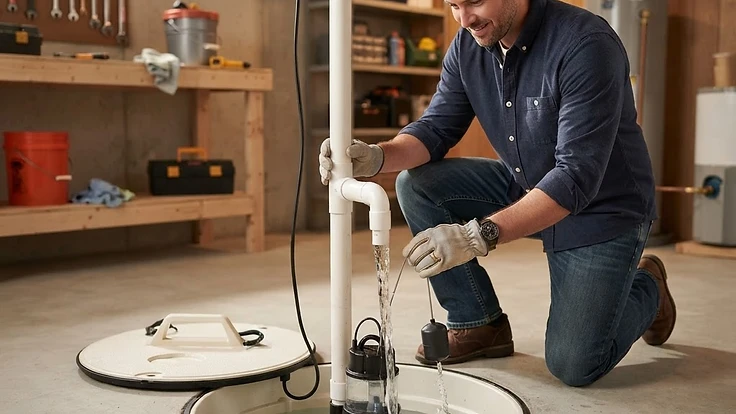
- Pour in a bucket of water—slowly. Add water until the float rises and the pump engages. Watch to confirm it activates on its own, not just when you manually lift the float.
- Listen and watch for proper operation. The pump should run smoothly, without grinding, straining noises, or excessive vibration. Water should visibly move out through the discharge line.
- Check the discharge outside. Walk outside and confirm water is actually exiting the discharge pipe and draining away from your foundation, not pooling right back toward the house.
- Time the cycle. Note how long it takes to empty the water you added. If it seems unusually slow, the impeller may be worn or partially clogged.
If the pump doesn't start, doesn't fully drain, or makes strange noises, you've just found a problem before it became a basement full of water.
Protecting Yourself from the Power Problem
Since power loss is the single biggest cause of sump pump failure during storms, it deserves special attention. A battery backup system is one of the best investments you can make for storm season—it keeps the pump running for hours even if the electricity goes out. Battery backups typically cost between $150 and $400 installed, which is a small price compared to the cost of water damage restoration.
If a battery backup isn't in the budget right now, at minimum make sure your pump is plugged into a dedicated outlet (not a shared circuit with other appliances) and consider a water-powered backup pump if you have municipal water pressure, as an alternative that doesn't rely on electricity at all.
A Few Maintenance Habits Worth Adopting
- Test your pump every 3–4 months, not just once a year.
- Clean the pit during each test to prevent sediment buildup around the float.
- Inspect the discharge line outside each season, especially before winter, to check for clogs or ice.
- Replace the pump proactively once it hits 8–10 years old, rather than waiting for it to fail.
This article is general information and not legal, financial, or medical advice.
Don't Wait for the Storm to Find Out
A sump pump is cheap insurance against one of the most expensive problems a homeowner can face. Testing it regularly, keeping the discharge line clear, and adding a battery backup are small efforts that can save you thousands in water damage and headaches down the road. The best time to discover a failing pump is on a calm, dry afternoon—not in the middle of a thunderstorm.
Start your free HomeNostics trial to get seasonal maintenance reminders—like sump pump checks—before storm season catches you off guard.