Water Stains on Your Ceiling? Here's How to Trace a Roof Leak to Its Actual Source
A ceiling stain rarely sits above the actual leak—learn how to trace water back to its real source before it causes bigger damage.
Water Stains on Your Ceiling? Here's How to Trace a Roof Leak to Its Actual Source
You spot a brown ring on your ceiling after a rainstorm and your stomach drops. Here's the frustrating part: the water almost never travels straight down. It can run along a rafter, follow insulation, or drip along a beam for several feet before it shows up as a stain in your living room. If you climb onto the roof and start patching directly above the mark, you might fix nothing at all.
Tracing a leak correctly takes a little detective work, but it's work you can do yourself before calling in a roofer—and it'll save you money either way, because you'll know exactly what to tell them.
Why the Stain Lies to You
Roofs are built in layers: shingles, underlayment, decking, rafters, and insulation. Water that gets past the shingles doesn't fall in a straight line—it follows the path of least resistance, usually along the underside of the roof decking or down a rafter, until it hits something it can't get around, like a nail, a joist, or a dip in the wood. That's where it finally drips through the drywall and shows up as a stain.
This means the actual entry point on your roof could be a foot or more uphill—or even to the side—from where you see damage inside. Understanding this is the key to not wasting time (or roofing cement) in the wrong spot.
Step 1: Start in the Attic, Not on the Roof
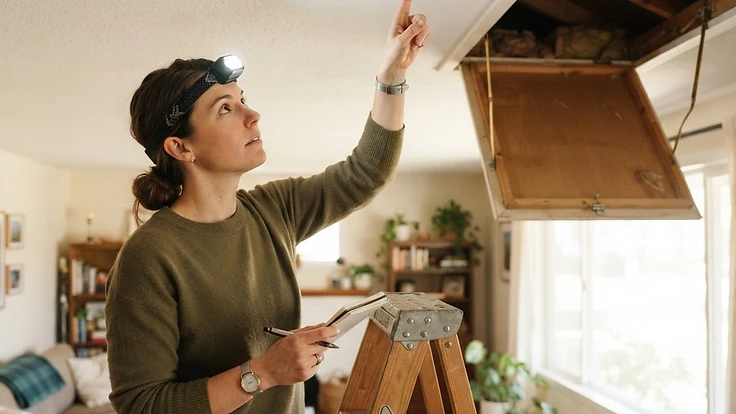
Before you ever climb outside, grab a flashlight and head into the attic during or right after a rainstorm if possible. This is the single best time to find an active leak.
- Look for wet spots, dark streaks, or mold on the underside of the roof decking.
- Follow any visible water trail uphill—literally trace it with your eyes toward the roofline, since water runs downhill along wood grain.
- Check for daylight. Small gaps around vent pipes, chimneys, or skylights often show a pinprick of light even when there's no visible water yet.
- Press gently on the decking near suspicious areas. Soft, spongy wood means water has been sitting there a while.
If you can't get into the attic (finished ceiling, cathedral ceiling, etc.), you'll need to rely on exterior inspection and pattern recognition, which we'll cover next.
Step 2: Check the Usual Suspects on the Roof
Once you have a general area from the attic (or a guess based on where the interior stain sits relative to the roofline), go outside and inspect these high-risk spots first—they cause the vast majority of roof leaks:
Flashing. The thin metal strips around chimneys, skylights, vent pipes, and where two roof slopes meet are the most common failure point. Look for flashing that's lifted, cracked, or where the sealant has dried out and pulled away.
Vent pipe boots. The rubber collar around plumbing vent pipes degrades over time, especially from UV exposure. Cracked rubber is an easy, almost invisible entry point for water.
Valleys. Where two roof planes meet and funnel water, debris can build up and force water sideways under the shingles instead of down the valley.
Damaged or missing shingles. Look for shingles that are curled, cracked, or simply gone. Binoculars from the ground work well if you're not comfortable walking the roof.
Nail pops. Occasionally a nail backs out slightly and creates a tiny gap. These are easy to miss but show up as small raised bumps under the shingle surface.
Step 3: Do the Hose Test
If the leak isn't obvious and it's not currently raining, you can recreate the conditions. With a helper inside watching the suspected area (attic or ceiling), run a garden hose over small sections of the roof, starting low and working upward, letting water sit on each section for several minutes before moving on. This slow, section-by-section approach helps you pinpoint exactly where water starts coming through, rather than soaking the whole roof at once and getting a confusing result.
Step 4: Temporary Fixes vs. Real Repairs
Once you've found the source, you have options depending on severity:
- Small gaps in flashing or boots: A high-quality roofing sealant can buy you time, but it's not usually a permanent fix—plan to have it properly re-flashed.
- Cracked vent boots: These are relatively inexpensive to replace and worth doing proactively every 10–15 years regardless of whether you've found a leak.
- Missing or damaged shingles: Replacing a handful of shingles is a manageable weekend project if you're comfortable on a ladder and roof.
- Soft or rotted decking: This is a sign water has been getting in for a while and means it's time to call a professional, since the wood itself likely needs to be cut out and replaced before any new roofing goes on.
A good rule of thumb: if the damage is confined to a small area and you caught it early, DIY repairs are reasonable. If you're seeing rot, mold, or the leak has been going on long enough that you're not sure when it started, bring in a roofer to assess the full scope—what looks like a small leak on the surface can sometimes mean a much larger problem underneath.
A Quick Safety Note
Roofs are steep, often slippery when wet, and not everyone's comfortable walking them. There's no shame in doing the attic inspection yourself and leaving the exterior work to a professional with the right harness and ladder setup.
Don't Let a Small Leak Become a Big Problem
The sooner you trace a roof leak to its real source, the less damage it does to your insulation, framing, and drywall. A stain the size of a dinner plate today can mean replaced decking and moldy insulation six months from now if the water keeps finding its way in. A little attic detective work now can save you a much bigger repair bill later.
Keeping track of when you last inspected your roof, replaced vent boots, or had flashing resealed makes it a lot easier to catch problems early instead of discovering them as a stain on your ceiling. Start your free HomeNostics trial to keep all your home's maintenance history in one place, with reminders before small issues turn into expensive ones.