
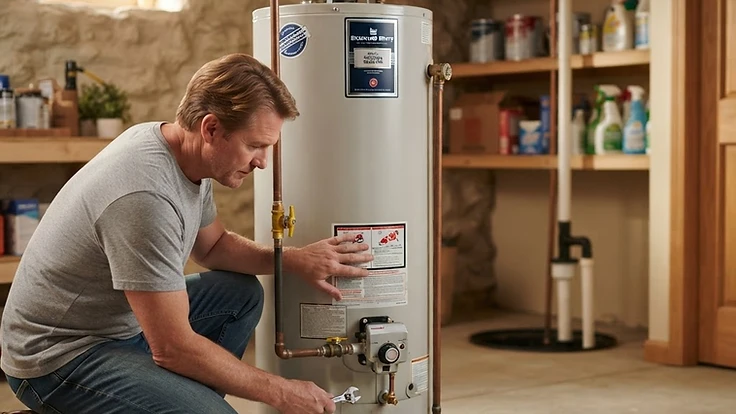
Why Your Water Heater Is Popping and Rumbling (And How to Fix It)
Popping or rumbling sounds from your water heater usually mean sediment buildup—here's how to diagnose it and flush the tank yourself.
That Popping Sound Isn't Normal—Here's What It Means
If your water heater has started making popping, cracking, or rumbling noises like it's cooking popcorn in the basement, you're not imagining things. This is one of the most common water heater complaints, and the good news is that it's usually easy to diagnose and fix yourself with basic tools and about 45 minutes.
The short answer: it's almost always sediment buildup. The slightly more involved answer is below, along with exactly how to clear it out before it shortens your water heater's lifespan or spikes your energy bill.
Why Sediment Builds Up in the First Place
Every time your water heater heats water, minerals dissolved in that water—mostly calcium and magnesium—settle to the bottom of the tank as sediment. This happens in every water heater, but it's worse if you have hard water, which is common in many regions.
Over months and years, this sediment forms a layer at the bottom of the tank. When the burner or heating element fires up underneath that layer, water gets trapped in tiny pockets within the sediment. As it heats, it turns to steam and pushes through the sediment crust, creating those popping and rumbling sounds you're hearing. It's essentially tiny steam explosions happening inside your tank.
This matters for two reasons:
- Efficiency loss. The sediment layer acts as insulation between the burner and the water, forcing your heater to work harder and longer to reach the same temperature. This can increase energy costs by 10-15% or more depending on how much buildup you have.
- Tank damage. Over time, this constant popping and thermal stress can weaken the tank and heating elements, leading to premature failure. A water heater that should last 10-12 years might only make it to 6-7 with heavy sediment buildup.
How to Confirm It's Sediment (Not Something Else)
Before assuming sediment is the culprit, rule out a couple of other possibilities:
- Popping only when the heater is running/heating: This points to sediment. Listen for the sound right after you use hot water, when the tank refills and reheats.
- Constant dripping or hissing: This could be a pressure relief valve issue, which is separate and worth checking on its own.
- Age of the unit: If your water heater is more than 3-4 years old and has never been flushed, sediment is almost certainly the cause.
If the popping is loud, frequent, and the unit is older, sediment is the most likely explanation in the vast majority of cases.
How to Flush Your Water Heater Yourself
You don't need to call a plumber for this—it's a DIY-friendly job. Here's the process:
What you'll need: a garden hose, a bucket (optional, for testing), and about 45 minutes.
- Turn off the power or gas. For electric heaters, flip the breaker. For gas heaters, turn the thermostat dial to "pilot" or off.
- Let the water cool. Give it a couple of hours if you've used hot water recently—you don't want to be draining scalding water.
- Turn off the cold water supply valve at the top of the tank.
- Connect a garden hose to the drain valve near the bottom of the tank and run it to a floor drain, outside, or a large bucket.
- Open the drain valve and open a hot water faucet somewhere in the house (this breaks the vacuum and helps water flow out).
- Let the tank drain completely. If sediment is heavy, water may come out cloudy or with visible grit. Some people turn the cold water supply on briefly in short bursts to stir up and flush out stubborn sediment—do this a few times if the water is still murky after the initial drain.
- Close the drain valve, disconnect the hose, and turn the cold water supply back on. Let the tank fill completely (you'll know it's full when water flows steadily from the hot faucet you opened earlier with no air sputtering).
- Turn the power or gas back on once the tank is full.
When to Flush Going Forward
Manufacturers generally recommend flushing your water heater once a year, though if you have notably hard water, every 6 months is safer. If you've never flushed yours and it's more than 2-3 years old, don't be surprised if a lot of sediment comes out on the first pass—this is normal and a sign the flush was overdue.
If after a thorough flush the popping noise continues, or if you notice rusty water, a leaking tank, or the unit struggling to maintain temperature, it may be time to call a professional to check whether the tank itself has sustained damage.
The Bottom Line
A popping or rumbling water heater is your home's way of telling you it's overdue for maintenance—not a sign of impending disaster, but definitely not something to ignore either. A simple annual flush can extend the life of your unit by years and keep your energy bills in check, all for the cost of a little time and a garden hose.
Keeping track of maintenance tasks like this—along with filter changes, gutter cleaning, and seasonal checklists—is a lot easier when you're not relying on memory alone. Start your free HomeNostics trial and let the app remind you before small issues like sediment buildup turn into bigger, costlier repairs.