Why Your Water Heater's Pressure Relief Valve Keeps Dripping (And What It's Really Telling You)
A dripping water heater relief valve isn't just annoying — it's a warning sign you shouldn't ignore.
That Drip Isn't Random — It's a Warning
If you've noticed water pooling near your water heater, or a steady drip coming from a small pipe on its side or top, you're looking at the temperature and pressure (T&P) relief valve doing its job. This valve exists for one reason: to release pressure or heat before your tank becomes dangerous. When it drips, it's telling you something in the system is out of balance — and it's worth figuring out why before you just tighten it shut or ignore it.
What the T&P Valve Actually Does
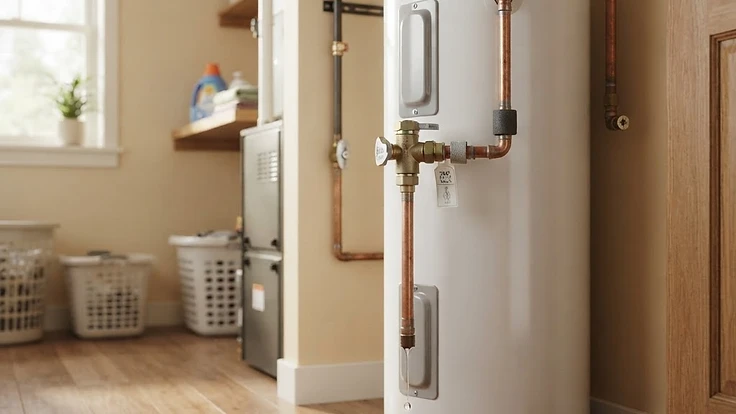
Every standard water heater has a T&P valve, usually located on the top or upper side of the tank, with a discharge pipe running down toward the floor. It's designed to open automatically if:
- The water temperature inside the tank exceeds about 210°F, or
- The pressure inside the tank exceeds about 150 psi
Both of these are safety thresholds. Past them, you risk tank rupture or, in rare cases, a dangerous steam explosion. So when the valve drips, it's not broken — it's doing exactly what it's supposed to do. The real question is why it's being triggered.
Common Causes of a Dripping Relief Valve
1. Thermal Expansion
As water heats, it expands. In older homes with a direct connection to the municipal supply, this expanded water can push back into the pipes. But many homes now have a check valve or pressure-reducing valve on the main line, which blocks that backflow. With nowhere to go, the expanding water raises pressure inside the tank — and the T&P valve opens to relieve it.
How to check: If your water pressure is already on the high side (city water commonly runs 60–80 psi, sometimes higher), thermal expansion will push it past the valve's threshold faster. A $10 pressure gauge from any hardware store, attached to an outdoor spigot, will tell you your baseline pressure in under a minute.
2. Excessive System Pressure
If your home's water pressure is consistently above 80 psi, it's stressing more than just your water heater — it's also shortening the life of your washing machine valves, dishwasher, and faucet cartridges. High pressure is one of the most common root causes of a leaking T&P valve, and it's fixable.
Fix: Install a pressure-reducing valve (PRV) on the main line if you don't already have one, or have an existing PRV checked — they fail over time and start passing higher pressure than they're set for.
3. No Expansion Tank
If you have a check valve or PRV on your main line (closed system) but no thermal expansion tank, your water heater has nowhere to send that expanding water except back out through the relief valve. This is one of the most frequently missed issues in homes that have had plumbing updates over the years.
Fix: A properly sized expansion tank, installed on the cold water line near the heater, gives that expanding water somewhere to go. It's a relatively inexpensive fix (often $50–$150 for the tank) and solves the problem at its source.
4. The Thermostat Is Set Too High
If your water heater's thermostat is set above 120–125°F, you're pushing the tank closer to the valve's temperature threshold, especially in older units where the thermostat may drift out of calibration.
Fix: Check the dial setting. If it's on "high" or set above 125°F, dial it back. This also saves energy and reduces scalding risk at the tap.
5. A Failing Valve
Sometimes the valve itself is simply worn out. Mineral deposits, corrosion, or age can cause it to leak even at normal pressure and temperature. Valves aren't meant to last forever — most manufacturers recommend testing them annually and replacing them every few years if they've ever activated.
How to Test the Valve Yourself
You can do a basic functional test in under five minutes:
- Place a bucket under the discharge pipe.
- Lift the test lever on the valve for a few seconds (standard on most models).
- Water should flow out, then stop completely when you release the lever.
If no water comes out, the valve may be stuck or corroded — replace it. If it keeps dripping afterward and won't fully reseat, that's also a sign the valve needs replacing, not just adjusting.
Important safety note: Never cap or plug the discharge pipe to stop a drip. That removes the one safeguard protecting your tank from building dangerous pressure. If it's leaking, treat it as a diagnostic clue, not a nuisance to silence.
When to Call a Plumber
If you've checked your water pressure, confirmed there's no expansion tank issue, and the thermostat is set correctly — but the valve still drips — it's time to call a licensed plumber. It could mean the valve itself needs replacing, or there's a less obvious pressure issue inside the tank worth a professional look.
The Bottom Line
A dripping T&P valve is one of the clearest early-warning signals your water heater gives you. Rather than tightening it, capping it, or hoping it stops, use it as a prompt to check your home's water pressure, confirm you have proper thermal expansion protection, and make sure the valve itself is still functioning correctly. Catching the real cause early can save you from a much bigger — and messier — problem down the road.
Start your free HomeNostics trial and keep track of maintenance tasks like this before they turn into costly repairs.