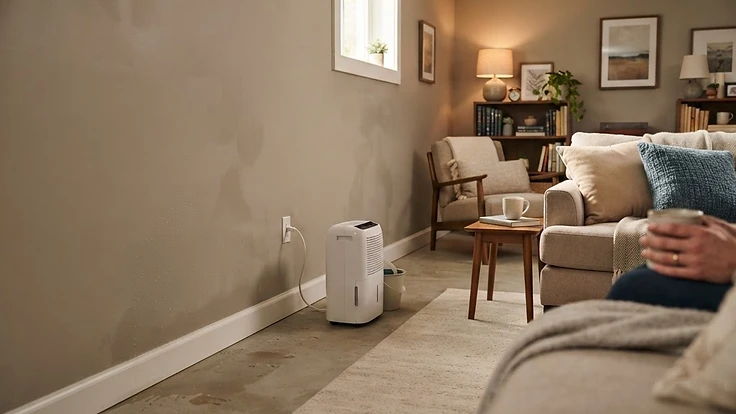
Why Your Basement Walls Are Sweating (And How to Stop It Before It Causes Damage)
Learn how to tell condensation from a water leak on basement walls, and the exact steps to stop the moisture before it causes mold or damage.
Why Your Basement Walls Are Sweating (And How to Stop It Before It Causes Damage)
If you've walked into your basement on a humid summer day and found the walls damp to the touch — almost like they're sweating — you're not imagining things. This is one of the most common basement complaints, and it's often dismissed as "just how basements are." It's not. Sweating walls are a sign of excess moisture, and left unchecked, that moisture can warp stored belongings, peel paint, and eventually turn into mold.
The good news: the cause is usually diagnosable with a simple test, and most fixes don't require a full waterproofing overhaul.
Step One: Figure Out If It's Condensation or a Leak
Before you treat the symptom, you need to know the cause. There are two very different culprits, and they need different fixes.
The classic test: Tape a small square of aluminum foil (about 12x12 inches) directly to the wall, sealing all four edges with tape so no air can get behind it. Leave it for 24 hours, then check it.
- Moisture on the outside (room-facing side) of the foil = condensation. Humid indoor air is hitting a cold wall surface and turning into water, the same way a cold glass of lemonade sweats on a summer day.
- Moisture on the inside (wall-facing side) of the foil = water intrusion. Water is actually moving through the wall from outside, which points to a grading, drainage, or waterproofing issue.
This five-minute test saves you from wasting money on the wrong fix — like running a dehumidifier for months when the real problem is a clogged gutter dumping water next to your foundation.
If It's Condensation: Humidity Is the Enemy
Basement walls stay cool year-round because they're surrounded by earth, which holds a steady, lower temperature than the air above ground. In summer, warm, humid air flows into the basement and meets those cool walls, and condensation forms — just like on a cold pipe or window.
How to fix it:
- Run a dedicated dehumidifier. Basement-rated units that can pull 30-50 pints a day are worth the investment if your basement runs consistently damp. Set it to keep relative humidity between 45-55%.
- Improve air circulation. Stagnant air makes condensation worse. A small fan or your HVAC system's "circulate" setting helps keep moisture from settling on cold surfaces.
- Close basement windows in summer. It feels counterintuitive, but opening windows on a humid day invites more moisture in, not less.
- Insulate cold surfaces. Rigid foam insulation on basement walls raises the surface temperature enough that moisture doesn't condense on it in the first place. This is especially useful if you're finishing the space.
- Check your dryer vent and bathroom fans. Make sure they exhaust outside, not into the basement or crawlspace, where they'll dump humid air right where you don't want it.
If It's Water Intrusion: Look Outside First
Water pushing through your foundation walls almost always starts with a problem at ground level, not underground. Before you consider a costly interior waterproofing system, walk the perimeter of your house after it rains and check these:
- Grading: The soil around your foundation should slope away from the house at least 6 inches over the first 10 feet. If it slopes toward the house, water pools against the foundation and seeps in.
- Gutters and downspouts: Downspouts should carry water at least 4-6 feet away from the foundation. A disconnected downspout extension is one of the most common (and cheapest to fix) causes of basement moisture.
- Window wells: If you have below-grade windows, make sure the wells have gravel at the bottom for drainage and aren't filling with debris or leaves.
- Cracks in the foundation: Hairline cracks are usually cosmetic, but anything wider than 1/8 inch, especially if it's horizontal or stair-stepped, is worth having a foundation specialist look at.
If you fix the grading and drainage and still see water coming through, especially after heavy rain, you may need an interior French drain system or exterior waterproofing membrane. That's a bigger job, but it's rarely necessary until the simpler fixes have been ruled out.
A Quick Note on White, Chalky Residue
If you see a white, powdery crust on the wall instead of visible wetness, that's efflorescence — mineral deposits left behind after water evaporates through concrete or masonry. It's not mold, and it's not dangerous, but it is a clear sign that water has been moving through the wall at some point. Brush it off and keep an eye on whether it returns after the next heavy rain.
Why This Matters More Than It Seems
A damp basement isn't just a nuisance — chronic moisture is the single biggest contributor to mold growth, mildew odors, and the slow deterioration of anything stored down there, from furniture to important documents. Catching and correcting the source early is far cheaper than dealing with mold remediation or structural repairs down the line.
This article is general information and not legal, financial, or medical advice.
The Bottom Line
Sweating basement walls have a cause, and it's almost always one of two things: humid air meeting a cold surface, or water finding its way in from outside. A simple foil test tells you which one you're dealing with, and from there the fix is usually a dehumidifier, better drainage, or a little both. Don't wait for it to become a mold problem — a damp basement is one of those issues that only gets more expensive the longer it sits.
Keeping track of these kinds of maintenance checks — gutter cleanings, grading inspections, dehumidifier filter changes — is exactly what HomeNostics is built for. Start your free HomeNostics trial and never lose track of what your home needs next.