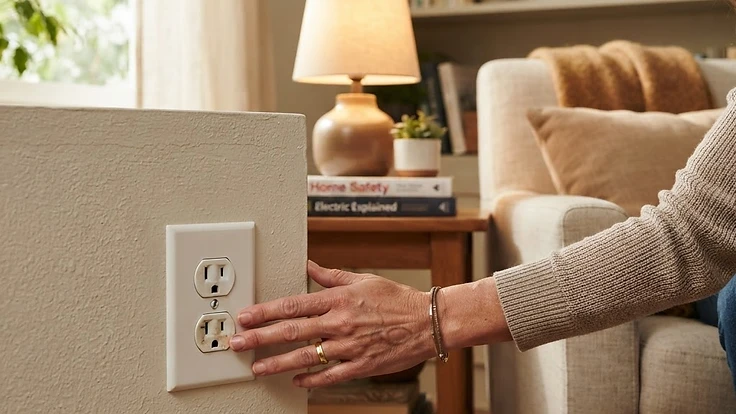
Why Your Electrical Outlets Feel Warm to the Touch (And When to Call an Electrician)
A warm outlet can mean a harmless high-draw appliance—or a loose wire connection that's a fire risk. Here's how to tell the difference.
That Faint Warmth Isn't Always Nothing
You go to unplug your toaster or phone charger and notice the outlet plate feels warm—maybe even a little hot. Your first instinct might be to shrug it off, especially if nothing looks burned or smells off. But outlets aren't supposed to generate noticeable heat under normal use, and a warm outlet is one of the more reliable early warning signs of an electrical problem brewing behind your wall.
The good news: not every warm outlet means an emergency. The key is knowing how to tell a harmless cause from a dangerous one, and what to check before you decide whether this is a DIY moment or a call-an-electrician moment.
What's Actually Causing the Heat
Electricity flowing through a connection always generates a tiny bit of heat—that's normal physics. The problem starts when resistance in that connection is higher than it should be, which concentrates heat in one spot instead of spreading it safely through the circuit. A few common culprits:
Loose wire connections. Over time, especially with temperature swings and minor vibrations in the house, the screw terminals holding wires inside an outlet can loosen. A loose connection creates resistance, and resistance creates heat—sometimes enough to discolor the outlet or melt plastic internally.
Overloaded circuits. If you're running a space heater, window AC unit, and a couple of other appliances off the same circuit, you may simply be asking more of that wiring than it's rated to handle. The outlet heats up because the whole circuit is working harder than it should.
High-draw appliances on a single outlet. Some single outlets just aren't built to handle sustained high-wattage loads. A warm outlet under a space heater that's been running for hours isn't necessarily a wiring fault—it might just be a mismatch between the appliance and the outlet.
Backstabbed connections. In many homes built or renovated in the last few decades, electricians (or DIYers) pushed wires into the back of outlets instead of wrapping them around screw terminals. These "backstab" connections are faster to install but notoriously prone to loosening and overheating years later.
Aging or damaged outlets. Plastic housings degrade with age and repeated use. An outlet that's 20+ years old and sees daily plugging and unplugging may simply have worn-out internal contacts that no longer grip prongs tightly, creating arcing and heat.
Quick Diagnostic Steps You Can Do Safely
Before assuming the worst, walk through this checklist:
- Unplug everything and feel the outlet again after 10 minutes. If it cools down quickly and evenly, the heat was likely from whatever was plugged in, not the outlet itself.
- Check what's plugged in. Space heaters, hair dryers, window units, and countertop appliances like air fryers draw a lot of current. If one of these was running, that may fully explain the warmth.
- Look at the outlet face. Any discoloration, a brownish tint around the slots, a faint burning smell, or a slightly melted look on the plastic is a red flag—even if the outlet currently feels cool.
- Check the circuit breaker panel. If the breaker for that outlet has tripped recently or feels unusually warm itself, that's another sign the circuit is overloaded or has a fault.
- Test other outlets on the same circuit. If multiple outlets on one circuit run warm, the issue is likely in the circuit wiring or breaker, not an isolated outlet problem.
- Listen and smell. A faint buzzing sound or any hint of an electrical/plastic burning smell means stop using that outlet immediately, regardless of temperature.
When It's a DIY Fix vs. When to Call a Pro
If the warmth is clearly tied to a high-draw appliance and the outlet cools down fast once unplugged, you can often resolve it by simply not running that appliance on that outlet long-term, or moving it to a dedicated circuit if you have a heavy-use item like a space heater or window AC.
However, if you're comfortable and confident working with electricity, a simple fix for a mildly warm outlet is tightening the terminal screws:
- Turn off the breaker for that outlet and confirm it's dead with a non-contact voltage tester.
- Remove the cover plate and the outlet itself.
- Check that the wires are tightly wrapped around the screw terminals (not just backstabbed) and snug.
- If the outlet shows any scorch marks, melted plastic, or loose, blackened wires, don't reinstall it—replace the outlet entirely. They cost just a few dollars.
That said, call a licensed electrician if:
- You see any burn marks, melted plastic, or smell something electrical/burnt.
- Multiple outlets on the same circuit run warm.
- The breaker trips repeatedly or feels hot to the touch.
- You're not fully confident shutting off power and verifying it's off before touching wiring.
- Your home still has older aluminum wiring or a fuse box, both of which have unique failure patterns best left to a pro.
Electrical issues are one area where "it's probably fine" is a risky bet. Overheating connections are a leading cause of residential electrical fires, and the visible warning signs often show up well before any real danger—which is exactly why they're worth taking seriously the first time you notice them.
Preventing Future Warm Outlets
A little prevention goes a long way:
- Avoid daisy-chaining power strips or running multiple high-wattage appliances off one outlet.
- Have outlets in kitchens, laundry rooms, and home offices inspected every 8–10 years, especially in homes with original 1980s–90s wiring.
- Replace any outlet that feels loose when you plug something in—a weak grip on the prongs is often the first sign of internal wear.
- If you're renovating or adding appliances, have an electrician confirm your circuits can handle the added load before you rely on them daily.
The Bottom Line
A warm outlet is your house's way of flagging that something in that circuit is working harder than it should. Most of the time it's a simple fix—tightening a connection or moving a space heater to its own outlet. But because the stakes of ignoring a real electrical fault are so high, it's worth a few minutes of checking rather than hoping it resolves on its own.
This article is general information and not legal, financial, or medical advice.
Keeping track of which outlets, appliances, and systems need attention across your whole house is exactly the kind of thing that's easy to forget until something goes wrong. Start your free HomeNostics trial and let the app help you stay ahead of small issues like this before they become expensive ones.