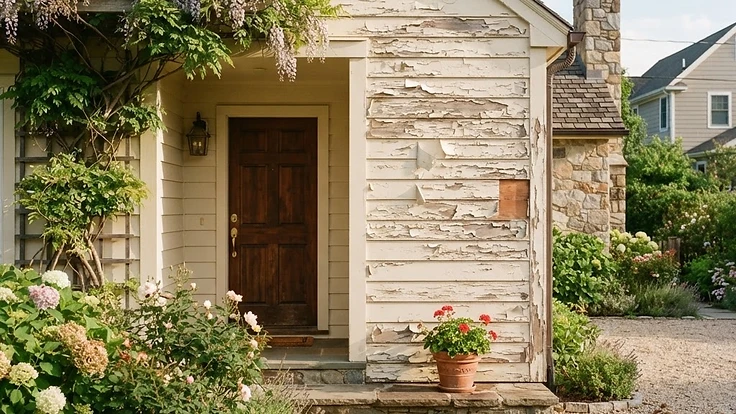
Why Your Exterior Paint Peels Faster on Certain Walls (And How to Stop It for Good)
If paint peels on one wall but not others, it's usually moisture or sun exposure—here's how to diagnose and fix the real cause.
The Mystery of the One-Sided Peel
You repainted the whole exterior two summers ago, and most of it still looks great. But one wall—usually the south or west side, or the one facing the sprinkler—is bubbling, cracking, and flaking like it's ten years older than the rest. That's not bad luck. Paint failure is almost never random, and when it's isolated to one area, it's usually pointing at a specific, fixable problem underneath.
Understanding why that one wall is failing will save you from repainting it again in two years, only to watch the same thing happen.
The Usual Suspects Behind Localized Peeling
1. Moisture Trapped Behind the Wall
This is the most common cause, and it's the one most people miss. Paint doesn't fail from the outside in most of the time—it fails from the inside out. Moisture gets into the wood or siding (from a leaky gutter, a cracked seal around a window, poor grading that lets water pool against the foundation, or even condensation from inside the house) and pushes outward as it evaporates. That pressure lifts the paint from underneath, which is why you often see bubbling or peeling in sheets rather than fine cracking.
How to check: Press a moisture meter (around $20–30 at any hardware store) against the siding in the affected area and compare the reading to an unaffected wall. A reading more than a few percentage points higher is a strong signal you've got a moisture source, not just old paint.
2. Sun Exposure Breaking Down the Paint Film
South- and west-facing walls take the brunt of UV exposure and heat cycling. Paint expands and contracts with temperature swings, and over years that stress causes the film to become brittle and crack—especially if the paint used wasn't rated for high-UV conditions or if a dark color was used (dark colors absorb more heat and expand more).
This type of failure tends to look like fine, even cracking (sometimes called