Why Your Kitchen Sink Drains Slowly (And How to Fix It for Good)
A slow kitchen sink is usually a grease-and-gunk clog you can clear yourself—here's how to diagnose and fix it without harsh chemicals.
The Slow Drain Nobody Takes Seriously (Until It's a Full Clog)
You run the water, and instead of swirling away, it just sits there, inching down the drain like it's got somewhere better to be. Most homeowners ignore a slow kitchen sink for weeks, sometimes months, until one day it stops draining entirely and dinner prep turns into a crisis. The good news: a slow drain is almost always a simple, fixable problem if you catch it early and know where to look.
Why Kitchen Sinks Clog Differently Than Bathroom Sinks
Bathroom drains clog mostly with hair and soap scum. Kitchen drains clog with something stickier: grease, oil, and food particles that cool and harden inside your pipes like candle wax. Even if you never pour bacon grease straight down the drain, cooking oil residue on dishes, small food scraps that slip past your strainer, and coffee grounds all add up over time. They coat the inside of your P-trap and the pipe beyond it, narrowing the passage until water can barely squeeze through.
If you have a garbage disposal, the problem can be compounded: disposals chop food into smaller pieces, but they don't eliminate grease, and small particles can still collect in the trap or further down the line.
How to Diagnose What's Really Going On
Before grabbing a bottle of drain cleaner, take five minutes to figure out where the clog actually is. This matters because the fix—and the tools you need—differ depending on location.
Step 1: Watch how it drains. Fill the sink partway, then pull the stopper. If water drains slowly but steadily, the clog is likely a partial blockage in the P-trap or the pipe just past it. If water doesn't move at all, or if you hear gurgling from other drains (like a nearby bathroom) when you run the kitchen faucet, you may have a blockage further down the main line—a bigger job.
Step 2: Check both sides if you have a double basin. If one side drains fine and the other doesn't, the clog is isolated to that side's trap or branch line, which narrows things down considerably.
Step 3: Smell test. A foul, sulfur-like odor coming from the drain usually points to trapped food debris and bacteria buildup rather than a structural pipe issue—good news, since that's the easiest kind to fix.
Skip the Chemical Drain Cleaner
It's tempting to reach for a bottle of liquid drain cleaner, but for kitchen sinks, these products often do more harm than good. The caustic chemicals can pit older metal pipes, damage PVC joints over time, and they rarely clear grease-based clogs completely—they just melt a channel through the blockage, which re-clogs within weeks. They're also hazardous if you end up needing to remove the trap by hand afterward.
What to Do Instead
1. Boiling water flush (for mild buildup). Boil a full kettle and pour it down the drain in two or three stages, waiting 30 seconds between pours. This works well for grease that hasn't fully hardened. Skip this step if you have PVC pipes under the sink—very hot water can soften joints over time. A near-boiling pour is usually fine, but avoid pouring it in one continuous stream over several minutes.
2. Baking soda and vinegar. Pour half a cup of baking soda down the drain, followed by half a cup of white vinegar. Cover the drain opening and let it fizz for 10–15 minutes, then flush with hot tap water. This won't dissolve a solid clog, but it breaks down lighter residue and clears odors.
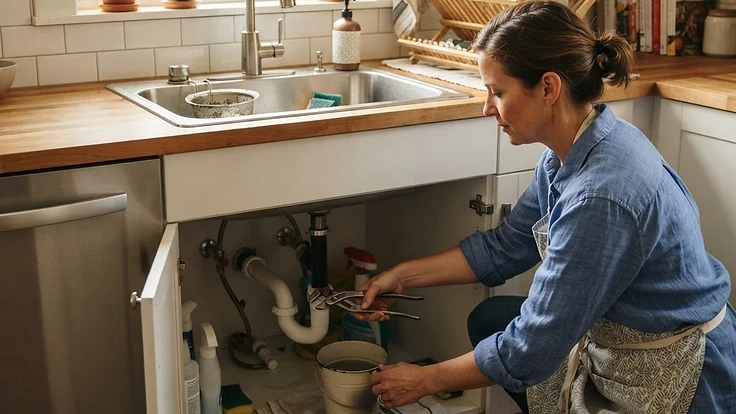
3. The P-trap check (for anything beyond mild slowness). If the above doesn't restore full flow, it's time to open the trap:
- Place a bucket under the P-trap (the U-shaped pipe beneath the sink) to catch water.
- Loosen the slip nuts on each end by hand or with channel-lock pliers.
- Remove the trap and dump out the contents into the bucket—this is almost always where the worst buildup lives.
- Use an old toothbrush or a bent wire hanger to clear out any remaining gunk from inside the trap and the pipe stubs it connects to.
- Reassemble, hand-tighten the nuts, then snug them slightly more with pliers. Run water and check for leaks before walking away.
4. A drain snake for stubborn clogs. If the trap is clear but the sink still drains slowly, the blockage is likely further down the branch line. A manual drain auger (inexpensive, available at any hardware store) can be fed through the drain opening or the trap arm to break up and pull out buildup you can't reach by hand.
Preventing the Next Clog
Once your drain is flowing freely again, a few small habits keep it that way:
- Wipe greasy pans with a paper towel before washing them, rather than letting oil wash straight down the drain.
- Keep a small strainer basket over the drain opening to catch food scraps, and empty it after every use.
- Run hot water for 15–20 seconds after washing greasy dishes to help flush residue further down the line before it has a chance to cool and stick.
- Do a baking soda and vinegar flush once a month as routine maintenance, not just as a fix.
When to Call a Plumber
If you've cleared the trap, run a snake through the branch line, and the sink still drains slowly—or if multiple drains in the house are affected simultaneously—the clog may be in your main sewer line or venting system. That's a job for a professional, since it often requires specialized equipment and may point to a larger plumbing issue.
A slow kitchen sink is annoying, but it's rarely a mystery. In most cases, the cause is sitting right in your P-trap, waiting for a five-minute cleanout. Catch it early, skip the harsh chemicals, and you'll save yourself the much bigger headache of a fully blocked drain down the road.
Start your free HomeNostics trial to get reminders for simple maintenance tasks like this before they turn into bigger repairs.