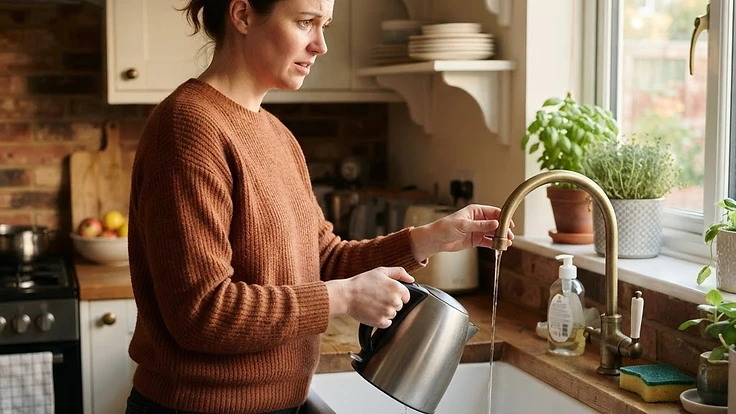
Why Your Water Pressure Is Suddenly Low (And How to Find the Real Cause)
Low water pressure has several distinct causes—here's how to diagnose yours in minutes instead of guessing.
That Sudden Weak Shower Isn't Random
One day your shower has decent pressure, and the next it's a sad trickle. Low water pressure is one of those problems homeowners tend to just live with, assuming it's "old pipes" or something unfixable. But sudden pressure drops almost always have a specific, traceable cause—and most of them are easy to diagnose yourself with a few simple checks before you call a plumber.
Step 1: Figure Out If It's One Fixture or the Whole House
This is the single most important diagnostic step, and it instantly narrows down your suspect list.
Turn on a faucet in another part of the house. If only one fixture is weak, the problem is local to that fixture. If pressure is low everywhere, the problem is upstream in your main supply line or regulator.
- One fixture only: Likely a clogged aerator, a failing cartridge, or sediment in the supply line to that specific faucet or showerhead.
- Whole house: Likely a pressure regulator, a partially closed valve, a water softener issue, or a problem with the municipal supply (or well pump, if you're on one).
Step 2: Check the Easy Stuff First
Before assuming the worst, rule out the simplest causes.
Clogged aerators and showerheads. Mineral buildup is the most common cause of weak flow at a single fixture, especially in hard-water areas. Unscrew the aerator from the faucet tip or the showerhead from the arm, and soak it in white vinegar for 30–60 minutes. Scrub out any sediment with an old toothbrush, rinse, and reattach. This fixes a surprising number of "sudden" pressure complaints.
Partially closed valves. Check the main shutoff valve near your water meter and any shutoff valves under sinks or behind toilets. A valve that's only partially open restricts flow without fully stopping it, which can feel exactly like a mysterious pressure drop. Make sure all relevant valves are turned fully open.
Water softener bypass. If you have a softener, switch it to bypass mode temporarily. If pressure improves immediately, your softener's resin bed or valve may be clogged or failing.
Step 3: Test and Inspect the Pressure Regulator
If the problem is house-wide and the easy checks didn't solve it, the pressure-reducing valve (PRV) is the next most likely culprit. This bell-shaped brass fitting is usually located where the main water line enters your house, often near the water meter or in the basement/crawl space.
PRVs fail over time, and when they do, they often fail toward restricting flow rather than letting too much through—so a sudden drop in house-wide pressure is a classic PRV symptom.
How to check it:
- Buy an inexpensive water pressure gauge (under $15 at most hardware stores) that screws onto an outdoor spigot or washing machine valve.
- Attach it and turn the spigot fully on.
- Normal residential pressure should read between 40–80 psi. Anything below 40 psi is noticeably weak; below 30 psi, most fixtures will struggle.
If your reading is low and you suspect the PRV, note that some regulators have an adjustment screw on top that can be turned clockwise to slightly increase pressure. This is a reasonable test, but if turning it doesn't help, the regulator itself likely needs replacement—this is a job most comfortable DIYers can attempt, but it does involve shutting off the main water supply and working with solder or press fittings, so hire a plumber if you're not confident with that.
Step 4: Look for Pipe Corrosion or a Hidden Leak
If you live in an older home with galvanized steel pipes, internal corrosion can narrow the pipe diameter over decades, gradually choking off flow. This usually causes a slow decline rather than a sudden one, but a partial pipe failure (like a section finally rusting through enough to restrict flow) can cause what feels like a sudden change.
A less obvious cause: a hidden leak elsewhere in your system, such as underground between the meter and the house, can rob pressure from your fixtures while also running up your water bill. Check your water meter: turn off every fixture and appliance in the house, then watch the meter's leak indicator (usually a small triangle or dial) for several minutes. If it's moving, water is flowing somewhere you can't see it, and that's worth bringing in a plumber for a leak detection inspection.
Step 5: Rule Out the Municipal Supply
If none of the above explains it, the issue might not be inside your house at all. Call a neighbor and ask if they've noticed similar problems. Utility companies occasionally reduce pressure for maintenance, or there could be a local supply issue, a stuck valve at the street, or construction work nearby affecting flow. Your water utility can usually tell you quickly whether there's a known issue in your area.
When to Call a Professional
DIY-friendly fixes include cleaning aerators, opening valves fully, and bypassing a softener for testing. Once you're dealing with a pressure regulator replacement, suspected underground leaks, or corroded galvanized piping, it's time to call a licensed plumber—these jobs often require specialized tools, code knowledge, and sometimes permits.
The Bottom Line
Low water pressure feels like a mystery until you systematically rule things out. Start by isolating whether it's one fixture or the whole house, clear out the obvious culprits like clogged aerators and valves, then test your PRV and check for hidden leaks. In most cases, the fix is far simpler—and cheaper—than homeowners expect.
Keeping track of when you last cleaned fixtures, tested your water pressure, or serviced your water heater and softener makes diagnosing problems like this much faster the next time something changes. Start your free HomeNostics trial to log your home's maintenance history and catch these issues before they become bigger headaches.