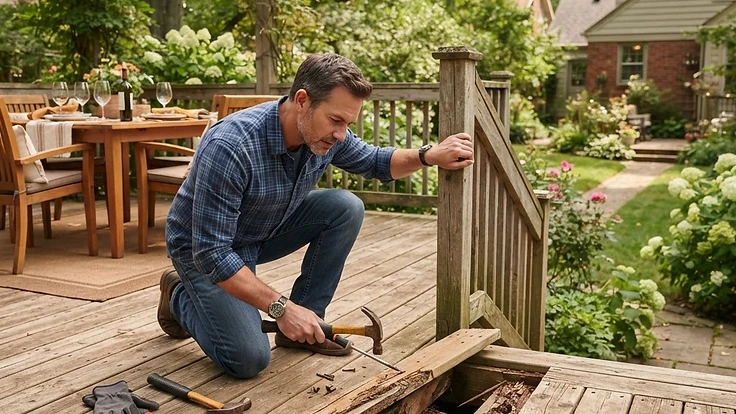
Why Your Deck Is More Dangerous Than It Looks (And How to Check It Before Summer)
Learn how to spot hidden deck damage—from rotted ledger boards to rusted fasteners—before it becomes a safety hazard.
Your Deck Might Be Hiding a Problem
Decks fail more often than people think, and almost never without warning signs. The trouble is, those warning signs are usually hidden underneath the structure, behind railings, or buried in joints that nobody checks until something gives way. A deck that looks perfectly fine from the top—clean boards, solid railing, no visible cracks—can still have serious structural problems brewing just out of sight.
The good news: a thorough deck inspection takes about 30 minutes and requires no special tools. Here's where to actually look.
Start With the Ledger Board (The Most Common Failure Point)
The ledger board is the horizontal beam that attaches your deck to your house. It's the single most common cause of deck collapses, because it's constantly exposed to moisture running off the house and often wasn't flashed properly when installed.
What to check:
- Look underneath where the deck meets the house. Is there a metal flashing strip visible above the ledger board? If not, water has likely been seeping behind it for years.
- Press a flathead screwdriver into the wood where the ledger meets the siding. If it sinks in easily or the wood feels soft and spongy, you've got rot.
- Check the bolts connecting the ledger to the house framing. They should be lag bolts or through-bolts—never just nails. If you see nails here, that's a red flag regardless of the deck's age.
If the ledger board shows rot, this isn't a DIY patch job. The ledger carries a huge portion of the deck's load, and a compromised one needs professional attention.
Check the Posts and Footings
Your deck's posts transfer weight down to the footings in the ground. Over time, posts can rot at the base where they meet concrete or soil, and footings can shift or heave, especially after freeze-thaw cycles.
What to check:
- Inspect each post at ground level and where it meets the concrete footing. Rot often starts right at this transition point because moisture collects there.
- Push against each post. There should be zero wobble. Any give at all means the connection to the footing has loosened.
- Look for gaps between the post base and the footing, or footings that have visibly tilted or cracked. This usually points to drainage problems or inadequate footing depth.
Inspect Joist Hangers and Fasteners
Joist hangers are the metal brackets holding your deck's horizontal support beams in place. They take a beating from weather and are easy to overlook because they're tucked underneath the deck surface.
What to check:
- Get underneath the deck and look at each hanger. Rust is normal in small amounts, but heavy rust, flaking metal, or hangers pulling away from the wood means they need replacing.
- Check that every hole in each hanger has a nail or screw in it. Contractors sometimes skip holes to save time, and this weakens the connection significantly.
- Look for any hangers that are bent, cracked, or show gaps between the metal and the wood they're attached to.
This is also a good time to check for galvanic corrosion—when different metals touch and react with each other, speeding up rust. If your hangers are galvanized steel but someone used regular (non-coated) screws, you'll often see accelerated corrosion right around the fastener holes.
Test the Railings and Balusters
Railing failures cause a disproportionate number of deck injuries, mostly because people lean on railings without a second thought. A railing that looks sturdy can still be attached with nothing more than a few nails that have worked loose over the years.
What to check:
- Grab the top rail with both hands and push firmly in multiple directions—forward, backward, side to side. It should not move at all.
- Check individual balusters (the vertical posts) for the same wobble test. Codes generally require balusters spaced no more than 4 inches apart, which also matters for child safety.
- Look at how the railing posts attach to the deck frame. They should be bolted through with structural screws, not just toe-nailed at an angle, which is a common shortcut that fails over time.
Walk the Surface and Watch for Soft Spots
Finally, walk the entire deck surface slowly, paying attention to how it feels underfoot.
- Soft or bouncy spots usually indicate rot in the joist below, even if the board on top looks fine.
- Gaps between boards that have widened significantly, or boards that have cupped (curled up at the edges), suggest moisture problems and reduced structural integrity.
- Check for discoloration, especially dark staining, which often means water is pooling and not draining properly.
When to Call a Professional
If you find rot in the ledger board, wobbly posts, or missing structural hardware, these aren't weekend fixes—they involve load-bearing components where a mistake can be dangerous. A structural contractor can usually assess and repair these issues in a day or two, and it's money well spent compared to the alternative.
For surface-level issues like a few loose boards, minor rust on hardware, or railings that just need re-tightening, those are reasonable DIY projects for most homeowners.
This article is general information and not legal, financial, or medical advice.
A Few Minutes Now Saves a Lot Later
Decks age quietly, and the parts most likely to fail are the ones you never see unless you go looking. Make this inspection an annual habit—ideally each spring before the deck gets heavy use again. Catching a rotted joist hanger or a loose ledger bolt early is a simple fix. Catching it after someone's standing on it when it gives way is a very different story.
Want help remembering to do checks like this before they become expensive problems? Start your free HomeNostics trial and get reminders, checklists, and guidance tailored to your home's maintenance needs.