Why Your Driveway Is Cracking (And How to Tell If It's Cosmetic or Structural)
Learn to tell harmless driveway cracks from serious ones, and how to seal and repair them before winter makes things worse.
Why Your Driveway Is Cracking (And How to Tell If It's Cosmetic or Structural)
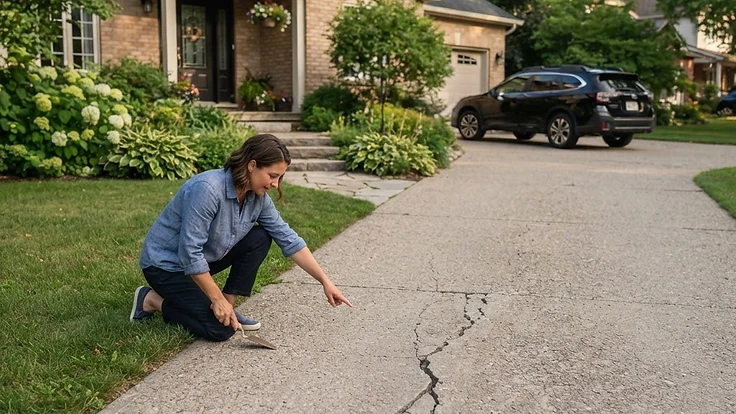
You pull into your driveway one day and notice a crack that definitely wasn't there last season. Is it a sign your driveway is falling apart, or just normal wear? The truth is, most driveways crack at some point—concrete and asphalt both expand, contract, and settle over time. The real skill is learning to tell a cosmetic crack from one that signals a bigger problem underneath.
Why Driveways Crack in the First Place
Driveways take a beating most homeowners don't think about: freeze-thaw cycles, tree roots pushing from below, heavy vehicles parked in the same spot, and water seeping into tiny gaps and expanding when it freezes. Concrete driveways crack mainly from shrinkage as they cure, soil movement underneath, or water infiltration that erodes the base. Asphalt driveways are more flexible, but they still crack from oxidation (the surface drying out and getting brittle) and from a weakening base layer.
The key factor in almost every case is what's happening underneath the surface. A driveway is only as good as the compacted base it sits on. If that base erodes, shifts, or washes out, the slab or asphalt above it has nothing to support it, and cracks follow.
Cosmetic Cracks: What's Normal
Most hairline cracks are nothing to panic about. Here's what tends to fall into the