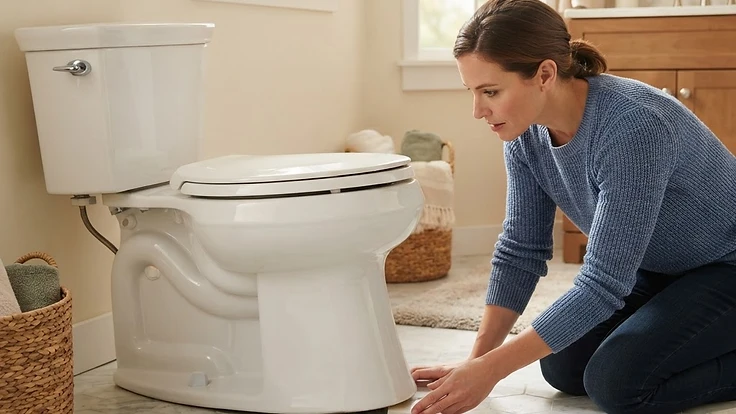
Why Your Toilet Rocks or Wobbles (And How to Fix It Before It Damages Your Floor)
A wobbly toilet isn't just annoying—it's often a sign of a failing seal that can rot your subfloor if ignored.
Why Your Toilet Rocks or Wobbles (And How to Fix It Before It Damages Your Floor)
If your toilet rocks side to side when you sit down, it's easy to shrug off as a minor annoyance. But a wobbly toilet is rarely just cosmetic—it's often a warning sign that the seal underneath is failing, the bolts have loosened, or the floor itself is starting to give way. Left alone, this small wobble can turn into a slow leak that rots your subfloor and costs thousands to repair. The good news: diagnosing and fixing it yourself usually takes less than an hour.
Step 1: Figure Out Why It's Rocking
Before you grab tools, you need to know what's actually causing the movement. There are three common culprits:
1. Loose closet bolts. These are the two bolts at the base of the toilet that anchor it to the floor flange. Over time, they can loosen from normal use, temperature changes, or a previous repair that wasn't tightened enough.
2. An uneven floor. Older homes especially can have slightly uneven bathroom floors, which means the toilet base never sat flush to begin with.
3. A failing wax ring or damaged flange. This is the one you really want to catch early. The wax ring creates a watertight seal between the toilet and the drain pipe below. If it's compressed, cracked, or was installed poorly, water can seep out with every flush—often so slowly you won't notice until there's a soft spot in the floor or a musty smell in the room below.
Step 2: Check the Bolts First
Start with the simplest fix. Remove the small plastic caps covering the bolts at the base of the toilet (they usually pop off with a flathead screwdriver). Try tightening each bolt with a wrench, turning clockwise in small increments.
A word of caution: don't overtighten. Porcelain cracks under too much pressure, and a hairline crack in the base can mean replacing the entire toilet. Tighten just until the toilet feels snug and stops rocking—if it still wobbles after both bolts are firm, the problem is deeper than loose hardware.
Step 3: Look for Water Damage Clues
This is the step most homeowners skip, and it's the one that matters most. Get down at floor level and inspect the area where the toilet base meets the floor:
- Discoloration or soft, spongy flooring around the base is a strong sign water has been leaking from the wax ring seal.
- A musty or sewage-like smell near the toilet, even when it's clean, often means gas or water is escaping past a broken seal.
- Visible gaps between the toilet base and the floor on one side suggest the toilet isn't sitting level, which puts uneven stress on the wax ring every time it's used.
If you have access to the ceiling below the bathroom (like a basement or crawlspace), check there too. Water stains directly under the toilet location are a clear sign the seal has already failed.
Step 4: Replace the Wax Ring (Here's How)
If you've ruled out loose bolts and suspect the seal, replacing the wax ring is a manageable DIY job:
- Turn off the water supply at the shutoff valve behind the toilet, then flush to empty the tank and bowl. Use a sponge or old towels to soak up remaining water.
- Disconnect the water supply line and remove the nuts from the closet bolts.
- Lift the toilet straight up off the flange—it's heavier than it looks, so bend at the knees and have a helper if possible. Set it on an old towel to protect your floor.
- Scrape off the old wax ring from both the toilet base and the flange using a putty knife. This part is messy, so keep paper towels or a trash bag handy.
- Inspect the flange. If it's cracked, rusted, or sitting too low relative to the finished floor, you may need a flange repair kit or extender—this is the root cause in a lot of